


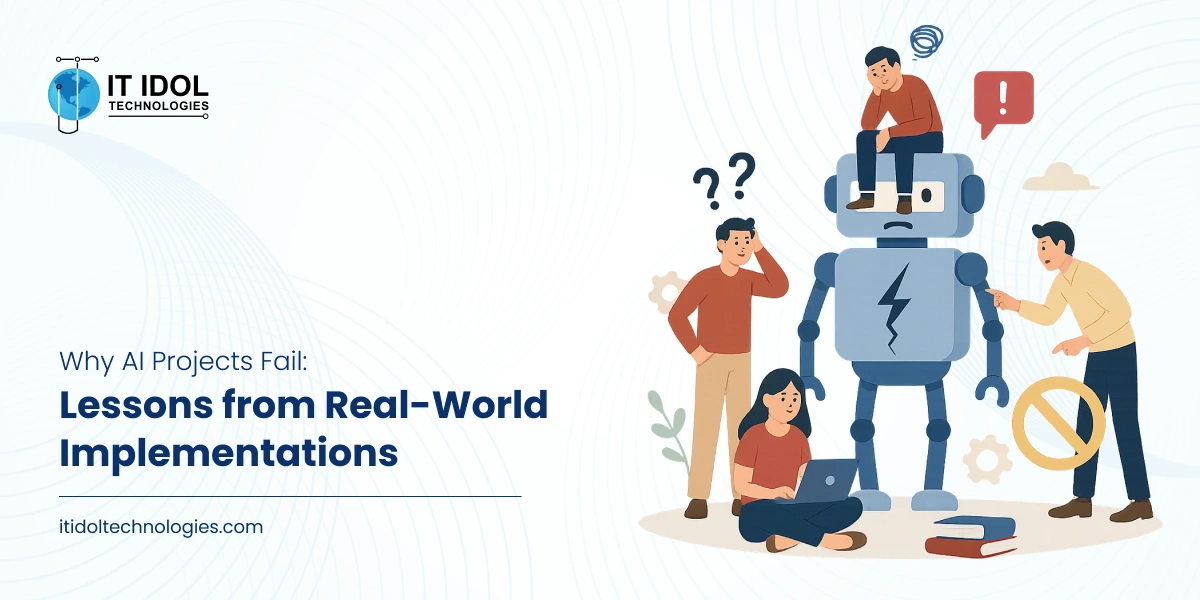
Why AI Projects Fail: Lessons from Real-World Implementations
In 2018, a global bank invested millions into building an AI-powered loan approval system. On paper, it looked revolutionary: faster approvals, better accuracy, and reduced risk.
But within months, the project was abandoned. The reason? The model could not handle the messy, real-world data of customers, and compliance regulators raised red flags about bias.
This story is not an exception. Across industries, companies are realizing that implementing artificial intelligence is not just about training a model. It is about aligning technology with business goals, culture, and processes.
By 2025, more than half of AI initiatives will still struggle to deliver measurable impact. The lesson is clear: AI failures teach us more than AI success stories ever could.
So why do AI projects fail, and what can leaders learn from the wreckage of ambitious but underperforming initiatives? Let us break it down.
The Context and Challenges of AI Projects
AI is no longer a futuristic experiment. From predictive analytics in healthcare to autonomous logistics in supply chains, it is embedded in critical decision-making.
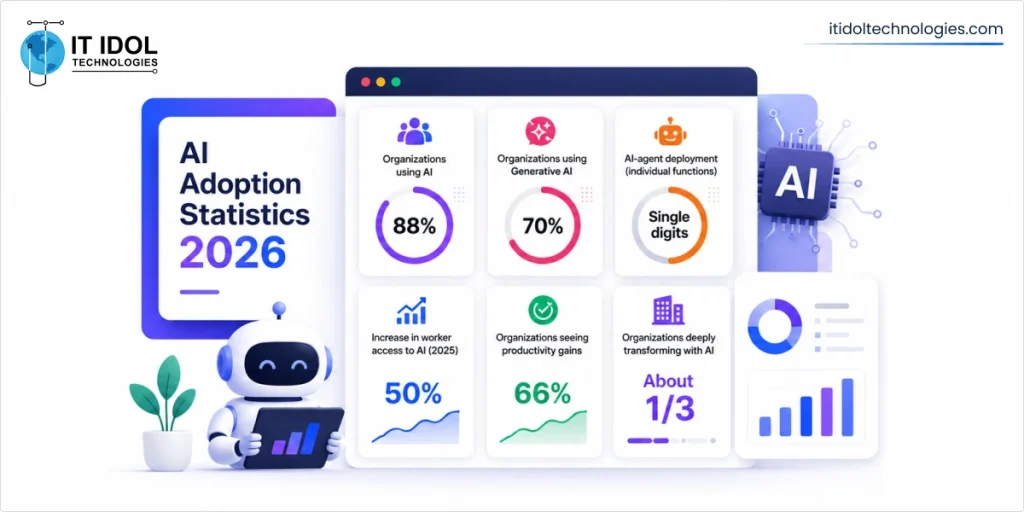
Yet, despite heavy investments, surveys consistently show that most organizations fail to scale their AI initiatives.
The challenges often start at the foundation. Many businesses underestimate the data problem, poor quality, siloed systems, or lack of governance.
Others dive into AI with excitement but without a clear business case. Teams may build impressive proofs of concept, only to realize they cannot integrate the solution into existing workflows.
And then comes the human factor. Resistance from employees, lack of trust in AI recommendations, or fear of job displacement can quietly erode the success of even the most technically advanced projects. AI is as much about people as it is about algorithms.
Core Insights and Lessons Learned

1. Start with the Business Question, Not the Technology
Many projects begin with, “We want to use AI.” That is like buying a luxury car before deciding if you actually need to drive.
The smarter approach is to ask, “What business problem are we solving?” Companies that succeed anchor AI initiatives in measurable outcomes such as reducing churn, improving safety, or cutting costs.
2. Data Is the Fuel, but Governance Is the Engine
A retailer once attempted to deploy an AI system to predict seasonal demand. The model was technically sound, but it consistently produced bizarre recommendations.
Later, the team discovered that the historical sales data excluded periods of stockouts, making it unreliable. The insight: clean, contextual, and governed data is more valuable than fancy algorithms. The NIST AI Risk Management Framework provides guidance for managing AI risks and incorporating trustworthiness considerations into the design, development, use, and evaluation of AI systems.
3. Culture and Change Management Are Make-or-Break
Imagine a hospital deploying an AI tool to recommend treatments. If doctors do not trust the system, they will ignore it, even if it is accurate.
Successful projects invest as much in building trust and transparency as they do in model training. Explaining how an AI decision was made often matters more than raw accuracy. The OECD AI Principles promote trustworthy, human-centric AI that respects human rights and democratic values.
4. The Scalability Gap
Pilots often shine in controlled settings but collapse when scaled across regions or departments.
Why? Because infrastructure, compliance, and integration challenges multiply. Treating AI projects as products rather than experiments helps bridge this gap.
Industry Relevance and Real-World Scenarios

- Banking: AI fraud detection models fail when fraudsters quickly adapt. Banks that combine AI with human investigators outperform those that rely on algorithms alone.
- Retail: Chatbots implemented without proper escalation protocols frustrate customers. Retailers who use hybrid models, AI for quick queries, and humans for complex cases report higher satisfaction.
- Healthcare: Diagnostic tools fail when trained only on narrow demographics. Hospitals that ensure diverse datasets reduce bias and improve patient outcomes. The World Health Organization’s guidance on ethics and governance of artificial intelligence for health addresses ethical challenges, governance, human rights, and accountability in AI used for healthcare.
These examples highlight a universal truth: AI does not fail because of a lack of intelligence. It fails because of a lack of alignment with real-world complexity.
Trends and Future Outlook

Looking ahead, businesses will need to adopt a holistic AI maturity model. That means not just developing algorithms, but also addressing ethics, compliance, and sustainability.
Trends to watch include:
- Responsible AI frameworks are becoming a regulatory requirement.
- Agentic AI systems that take initiative make monitoring and governance even more critical.
- Domain-specific AI is replacing one-size-fits-all models, tailored for healthcare, finance, or manufacturing.
- Human-AI collaboration evolving from co-pilots to true partners in decision-making.
In the next decade, companies that succeed will be those that treat AI not as a side project but as a transformation journey.
Actionable Takeaways
- Define success upfront: Tie AI projects to KPIs that matter.
- Invest in data quality: Build governance before scaling.
- Engage stakeholders early: From executives to frontline staff, build trust and clarity.
- Scale plan, not pilots: Think beyond proof of concept.
- Stay ethical and compliant: Transparency and fairness are non-negotiable.
Conclusion
AI failures may dominate headlines, but they are not wasted efforts. They are stepping stones toward building resilient, responsible, and impactful systems. Every failed chatbot, misfired predictive tool, or abandoned pilot carries a lesson in humility and foresight.
In 2025, the organizations that thrive will not be those who avoid mistakes, but those who learned quickly from them. The path to AI success is not straight; it is iterative, human-centered, and guided by vision.
Also Read: CFOs Beware: MIT Says GenAI ROI Is Missing in 95% of Projects