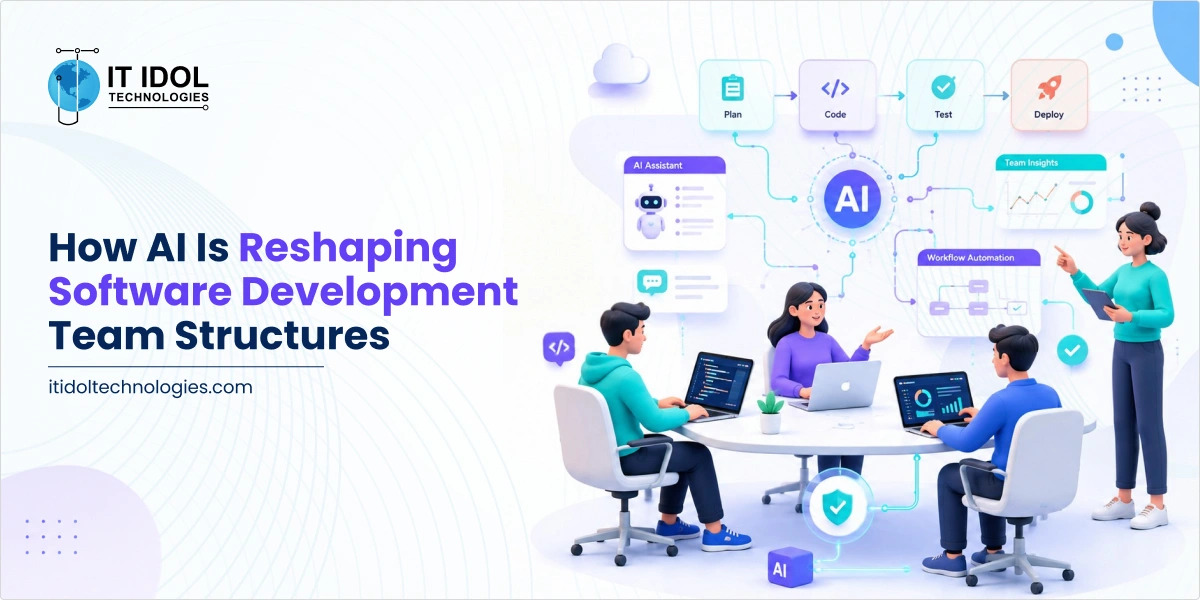
AI coding assistants accelerate routine development tasks but don’t replace developers
The role of developers is shifting from code creation to code curation
Productivity gains depend on how well AI is integrated into workflows
Human skills like architecture, judgment, and context remain critical
Risks include code quality issues, security concerns, and over-reliance
Organizations must balance speed with governance and oversight
The future is collaborative: AI augments developers, not replaces them
The anxiety around AI replacing software developers has a familiar rhythm. It echoes past waves of automation, each promising efficiency, each triggering concern about relevance. But inside engineering teams actually using AI coding assistants today, the story looks far less binary. What’s emerging is not displacement, but redistribution: of effort, of focus, and increasingly, of value.
Tools like GitHub Copilot, Amazon CodeWhisperer, and ChatGPT-based coding assistants are already embedded in modern development workflows. Yet their real impact isn’t about writing entire applications autonomously. It’s about accelerating specific layers of the development process while leaving judgment, architecture, and accountability firmly in human hands. The shift is subtle, but strategically significant.
The Rise of AI Coding Assistants in Real Workflows
AI coding assistants have moved beyond novelty into daily utility. Developers use them to generate boilerplate code, suggest functions, refactor legacy logic, and even explain unfamiliar codebases. In practice, they function less like autonomous engineers and more like highly responsive pair programmers.
This aligns with broader enterprise observations. According to research from McKinsey, generative AI can significantly accelerate software development tasks, particularly in documentation, testing, and code generation. However, these gains are uneven. The highest productivity improvements tend to occur in well-defined, repetitive tasks, not in ambiguous, high-stakes engineering decisions.
That distinction matters. It reinforces a key reality: AI is strongest where context is constrained, and patterns are predictable. Software development, especially at scale, rarely stays within those boundaries.
What AI Does Well and Where It Stops
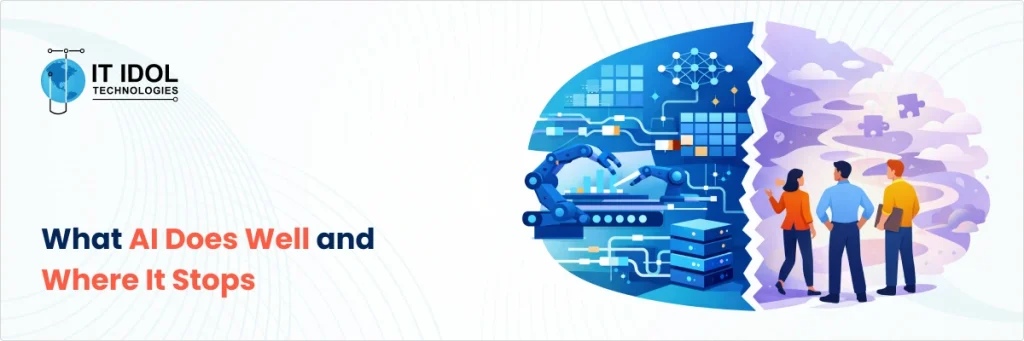
AI coding assistants excel in three core areas: speed, recall, and pattern recognition. They can instantly surface syntax, generate standard implementations, and adapt known solutions to similar problems. For developers, this removes friction from routine work.
But beyond that layer, limitations become apparent. AI struggles with long-range architectural reasoning, understanding evolving business logic, and navigating trade-offs that require domain expertise. It also lacks accountability, something that becomes critical in production systems.
That change is already visible. Developers are spending less time writing repetitive code and more time validating, refining, and integrating AI-generated outputs.
The Shift from Code Creation to Code Curation
One of the most important changes AI introduces is a shift in developer responsibility. Writing code is no longer the sole or even primary value driver. Instead, developers increasingly act as curators.
This involves reviewing AI-generated suggestions, testing their correctness, adapting them to specific contexts, and ensuring they align with system architecture. In effect, developers move up the value chain, focusing on decisions rather than execution. This mirrors a broader trend seen across knowledge work. Automation doesn’t eliminate roles; it reshapes them. In software development, that reshaping is particularly pronounced because the work itself is already abstract and iterative.
Collaboration in Practice: How Teams Are Adapting
Inside engineering teams, AI coding assistants are being integrated in ways that complement, not disrupt, existing workflows. Junior developers often use them as learning tools, accelerating onboarding by providing contextual explanations and examples. Senior developers, on the other hand, use them to reduce cognitive load during complex problem-solving.
The result is a more fluid collaboration model. AI becomes a shared resource rather than an individual tool, influencing how teams approach tasks like code reviews, debugging, and documentation.
There’s also a cultural shift underway. Teams are redefining what “productivity” means. It’s no longer measured purely by lines of code written, but by the speed and quality of outcomes delivered. That distinction between output and impact is becoming central to how organizations evaluate engineering performance.
Business Impact: Speed, Cost, and Competitive Advantage
From a business perspective, the appeal of AI coding assistants is clear. Faster development cycles translate into shorter time-to-market. Reduced manual effort lowers costs. An improved developer experience can help attract and retain talent.
But these benefits are not automatic. Organizations that see meaningful gains tend to invest in integration, governance, and training. They treat AI as an augmentation layer, not a plug-and-play solution. In other words, the competitive advantage doesn’t come from using AI; it comes from using it well.
The Hidden Trade-Offs: Quality, Security, and Over-Reliance
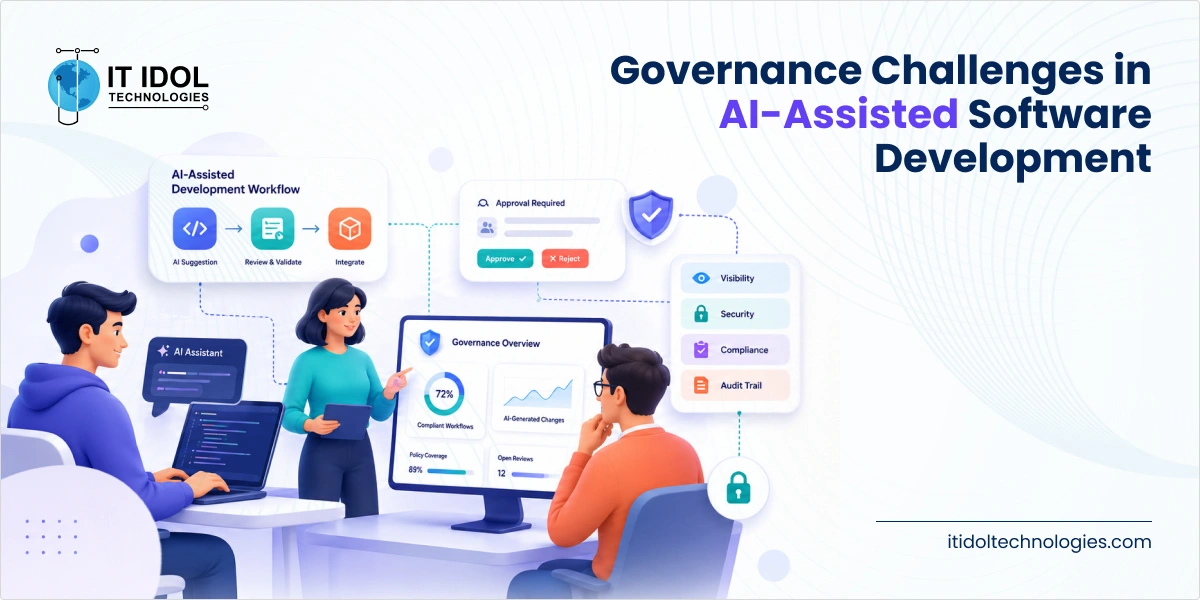
Despite its advantages, AI-assisted development introduces new challenges. One of the most immediate is code quality. AI-generated code can appear correct while containing subtle flaws, especially in edge cases. Security is another concern. Since AI models are trained on large datasets, there’s a risk of reproducing vulnerable patterns or outdated practices. Without rigorous review processes, these issues can propagate into production systems.
There’s also the question of over-reliance. Developers who depend too heavily on AI may experience skill atrophy, particularly in foundational areas like algorithm design or debugging. This creates long-term risks for both individuals and organizations. Responsible adoption, in this context, means maintaining human oversight and ensuring that AI complements rather than replaces expertise.
Rethinking Developer Skills in the AI Era
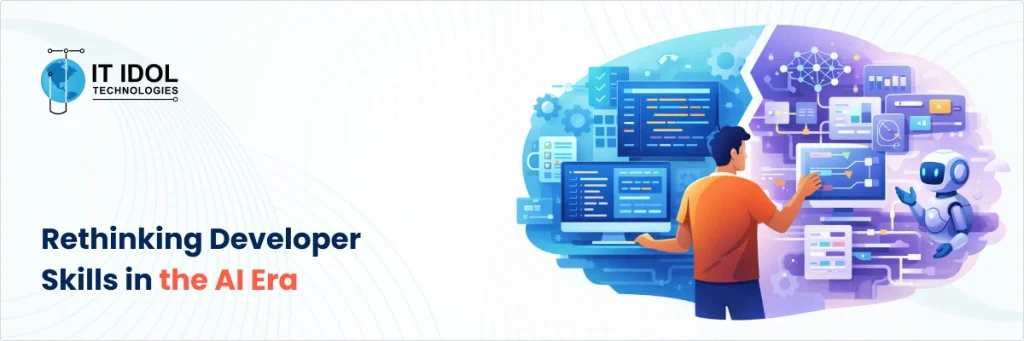
As AI reshapes development workflows, the skill profile of developers is evolving. Technical proficiency remains essential, but it’s no longer sufficient on its own.
In many ways, these are the skills that AI struggles to replicate. They require context, judgment, and an understanding of broader business objectives.
This shift also has implications for hiring and training. Organizations are placing greater emphasis on adaptability and learning agility, recognizing that tools will continue to evolve.
The Human Advantage: Context, Creativity, and Accountability
At its core, software development is not just a technical activity; it’s a problem-solving discipline. It involves translating business needs into functional systems, often under constraints that are dynamic and unpredictable.
This is where human developers retain a clear advantage. They bring contextual understanding, creative thinking, and a sense of ownership that AI cannot replicate. AI can generate code, but it cannot fully understand why that code matters. It cannot negotiate trade-offs between performance and maintainability, or align technical decisions with strategic goals.
These are inherently human capabilities, and they remain central to effective software development.
The Future: Co-Evolution, Not Competition
Looking ahead, the relationship between AI and developers is likely to deepen. Tools will become more sophisticated, integrating more seamlessly into development environments and workflows. But the fundamental dynamic will remain collaborative. AI will continue to handle routine tasks, while humans focus on complexity and innovation.
Software development is following the same trajectory, arguably at a faster pace.
Conclusion
The narrative of replacement misses the point. AI coding assistants are not competitors to human developers; they are amplifiers. Organizations that recognize this distinction are better positioned to capture value. They invest in tools, but also in people. They optimize workflows, but also redefine roles. And they treat AI as a partner in innovation, not a shortcut to efficiency.
For businesses navigating this shift, the priority should be integration with intent, aligning AI capabilities with real-world development needs.
At IT IDOL Technologies, this philosophy is already shaping how modern engineering teams are built and supported. The focus is not on replacing talent, but on enabling it, combining human expertise with intelligent tools to deliver faster, smarter, and more resilient software outcomes.
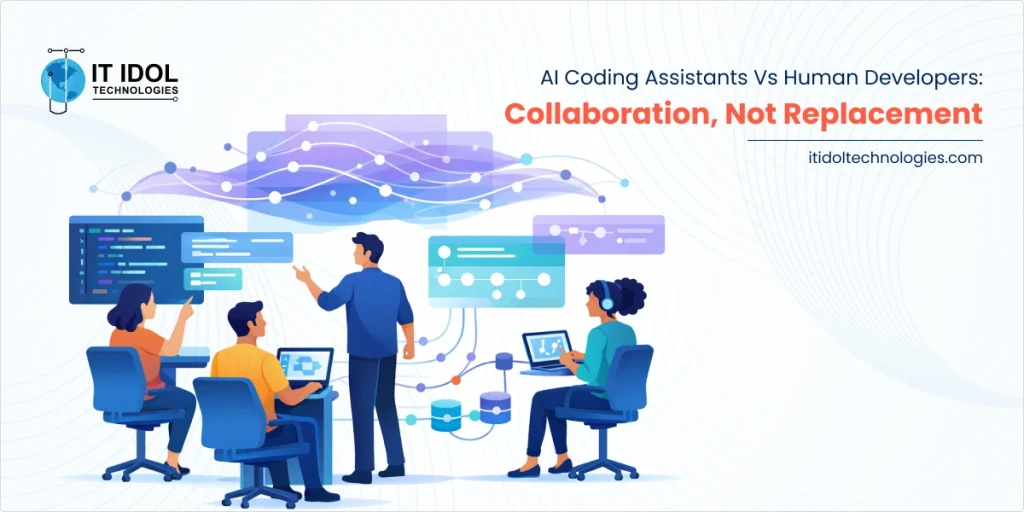
A collaborative model where AI handles routine tasks and humans focus on innovation.
Deval Rathod
Founder & CEO
|
Deval Rathod is the Founder and CEO of IT IDOL Technologies, a custom software development company. With over a decade of experience in software engineering, solution architecture, and technology leadership, she has worked across custom software development, enterprise applications, AI & ML, and digital transformation. Her expertise includes guiding technology teams, designing scalable software solutions, and helping businesses evaluate and implement emerging technologies. She contributes insights on software engineering, artificial intelligence, enterprise technology, and digital transformation.