A Behind-the-Scenes Look at IT IDOL Technologies’ Approach
In the investment research world, speed is synonymous with value. Whether it’s a fund manager analyzing quarterly filings, an equity analyst tracking news sentiment for a sector, or a risk analyst reviewing commodity updates, everyone depends on one thing: instant and accurate access to information.
Behind these seemingly simple user experiences lies an intricate network of data pipelines, APIs, document repositories, indexing engines, and delivery layers working in perfect sync.
However, as research platforms scale to millions of documents, hundreds of data sources, and global user bases, even minor inefficiencies in their engineering architecture begin to ripple outward, slowing performance, creating inconsistencies, and ultimately affecting the quality of decision-making.
A leading global investment research provider faced this exact challenge. Their system supported highly respected financial intelligence products that serve analysts worldwide, offering comprehensive coverage across corporate filings, market data, oil & gas, mining, regulatory updates, and more.
However, as datasets grew, the document management architecture struggled to keep up. Indexing delays, mismatches between internal platforms, and inconsistent document viewing experiences began impacting users.
To modernize these critical backend systems, the organization partnered with IT IDOL Technologies, a team specializing in enterprise-grade engineering and digital modernization for data-intensive industries.
This is a comprehensive examination of how the transformation unfolded.
Why Investment Research Platforms Need Modern Engineering More Than Ever
Unlike consumer applications, investment research platforms operate under unique constraints:
High document velocity: Thousands of new documents flow in from regulators, exchanges, and companies daily.
Strict timeliness expectations: Analysts make decisions in minutes, not hours.
Regulatory precision: Every version of a document matters; accuracy is non-negotiable.
Cross-platform distribution: Documents must appear consistently across various product tiers.
Search-intensive workloads: Users expect sub-second results when browsing complex data.
In this client’s environment, documents lived across CIQ, CIQ PRO, and CIQ PRO Solr, three internally connected but technically distinct systems. Any mismatch or missing document created friction in analyst workflows.
The gaps were not due to a lack of data, but the foundational engineering mechanics: indexing pipelines, API behavior, platform parity, and consistency checks.
IT IDOL Technologies stepped in to address these issues through a combination of automation, cloud-native engineering, and modernization of content workflows.
Discovery: Understanding the Gaps Beneath the Surface
During the initial discovery phase, IT IDOL Technologies conducted detailed assessments across:
Existing Solr indexing flows
Data retrieval and processing pipelines
GraphQL API structure
Document routing and user experience logic
Internal tooling for content validation
Deployment processes across AWS and Kubernetes
Observability, logging, and security tools
Multiple Root Causes Emerged:
1. Indexing delays
Manual steps slowed document updates, leading to time lags between the database and Solr search results.
2. Platform disparities
Some documents appeared in CIQ but were missing in CIQ PRO or Solr due to untracked publishing inconsistencies.
3. Document redirection confusion
Users navigating between platforms sometimes got redirected to external sites for PDF viewing, breaking the flow and causing frustration.
4. Limited oversight
No automated mechanism existed to compare documents across systems, making it hard to track missing or mismatched content.
With these insights, IT IDOL Technologies designed a multi-layered engineering solution.
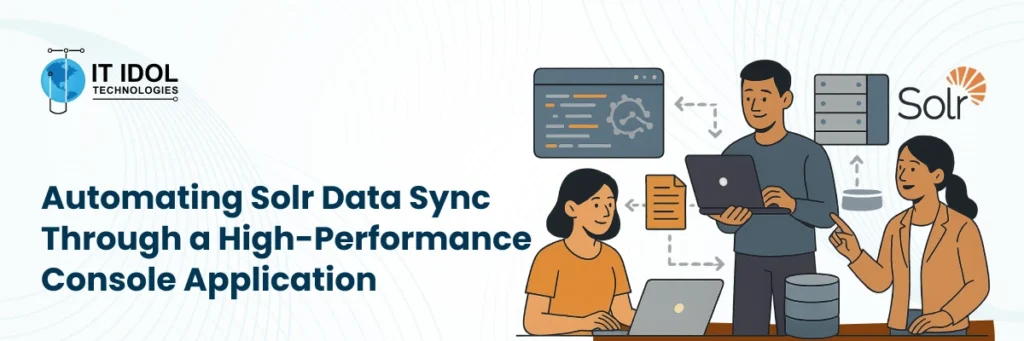
Automating Solr Data Sync Through a High-Performance Console Application
Document indexing is the backbone of any research platform. If indexing lags, everything else, search, retrieval, and analytics suffers.
To eliminate bottlenecks, IT IDOL Technologies engineered a robust Console Application that automates the entire Solr sync lifecycle.
How It Works:
Pulls data from SQL-based repositories
Cleans, transforms, and normalizes document metadata
Prepares Solr-ready data structures
Pushes the updated dataset to Solr automatically
Runs on a scheduled background job every week
Why It Matters:
This automation ensures:
No manual steps
No delays
No indexing mismatches
Higher accuracy in document search results
The console application dramatically improved content freshness, allowing analysts to access newly uploaded documents faster and without hiccups.
Introducing a Modern GraphQL Layer to Simplify Document Interactions
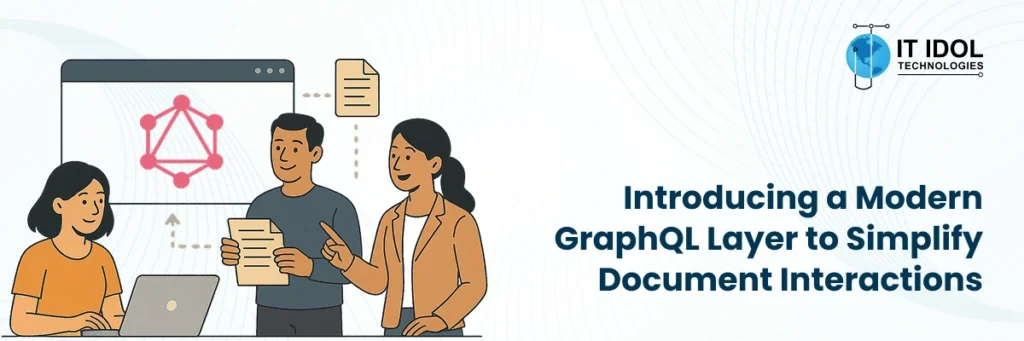
As the product evolved, the need for a more flexible, modern API layer became clear. GraphQL was the perfect choice due to its ability to fetch only the required fields, ideal for document-heavy operations.
IT IDOL Technologies developed a custom GraphQL application using ASP.NET Core and deployed it on an EKS (Elastic Kubernetes Service) cluster for high scalability.
Two advanced features were built into this GraphQL layer:
A. Linkback Carve-Out Feature
This handles document routing logic across different platform tiers, ensuring users get the right version of a document based on entitlement and product behavior.
B. File Redirection Flag
Previously, some documents redirected users to external client URLs. This was inconsistent, confusing, and created security considerations.
IT IDOL Technologies added a GraphQL-controlled flag that:
Let the platform disable redirection
Forces PDFs to open inline within the existing product
Ensures a clean, smooth user experience
This feature became one of the quickest usability wins across the platform.
Document Comparison Tool: Creating a Single Source of Truth Across CIQ, CIQ PRO & Solr
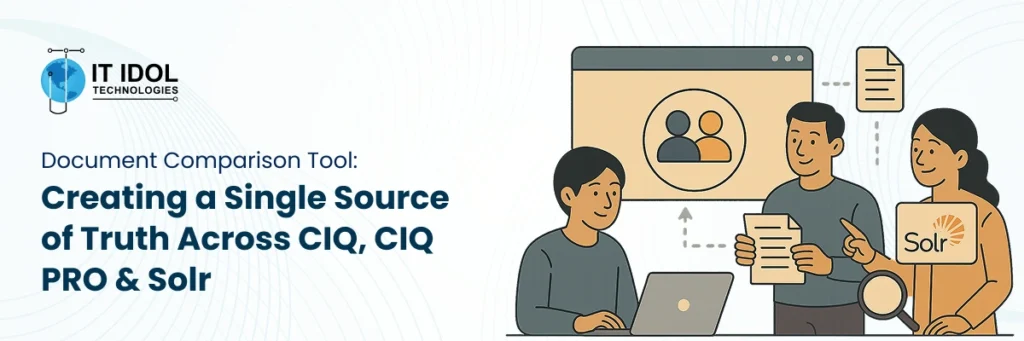
One of the most impactful innovations in the project was a Document Parity Tool, a specialized internal application designed to ensure consistency across all content platforms.
What It Does:
Retrieves document lists from CIQ, CIQ PRO, and Solr
Runs deep comparisons of document availability
Highlights missing, mismatched, or out-of-sync content
Generates parity reports for internal stakeholders
Supports ongoing maintenance and QA cycles
The Business Impact:
For a research platform, a missing regulatory filing or financial statement isn’t a minor issue; it can derail analysis.
The parity tool virtually eliminated undocumented discrepancies and gave the internal operations team full visibility into platform-wide content health.
Continuous Improvement Through Sprint-Based Bug Resolution
Along with feature builds, IT IDOL Technologies collaborated with the client’s internal engineering teams through:
Azure DevOps pipelines
GitHub workflows
Kubernetes dashboards
AWS monitoring tools like Datadog and Kibana
The team resolved backend bugs, optimized API behavior, improved document pipelines, and enhanced performance across both frontend (React, Knockout.js) and backend layers.
This ensured the platform not only gained new features but also became more stable, secure, and future-ready.
The Technology Backbone Behind the Project
The modernization leveraged a robust engineering ecosystem:
Frontend:
React
Knockout.js
Backend:
ASP.NET Core
GraphQL
SQL
Solr
DevOps, Cloud & Monitoring:
AWS & EKS
Kubernetes Dashboard
Azure DevOps
GitHub
Kibana
Datadog
Fortify
Visual Studio & VS Code
Each component played a role in ensuring scalability, reliability, and operational excellence.
The Transformation: What the Client Gained
By the end of the engagement, the transformation delivered several measurable outcomes:
✔ Faster and more reliable document indexing
Automated sync ensured documents were always fresh and available.
✔ Cleaner, more consistent user experience
Inline PDF rendering removed redirection friction.
✔ Accurate, platform-wide document availability
The parity tool ensured no gaps between CIQ, CIQ PRO, and Solr.
✔ Stronger backend performance and stability
Ongoing bug resolution and architecture refinements enhanced platform reliability.
✔ A scalable, cloud-ready foundation
GraphQL on EKS positioned the platform for future growth and new product capabilities.
Final Thoughts
Investment research platforms thrive on accuracy, reliability, and speed. Modernizing the engineering backbone is no longer optional; it’s essential for delivering uninterrupted analyst experiences.
Through automation, API modernization, platform parity tools, and cloud-native engineering, IT IDOL Technologies helped this client remove systemic inefficiencies and build a foundation ready for the next decade of financial research innovation.
FAQ’s
1. What is modern engineering in the context of investment research platforms?
Modern engineering refers to the use of cloud-native architectures, microservices, automation, AI-driven workflows, and scalable backend systems to build faster, more secure, and more adaptable research platforms.
2. How does modern engineering improve the speed and accuracy of investment research?
By integrating real-time data pipelines, automated validation, and AI-powered analytics, research platforms can process large datasets instantly and deliver more accurate insights with minimal manual effort.
3. Why do investment research firms need cloud-native platforms today?
Cloud-native platforms provide on-demand scalability, high uptime, faster deployments, and the ability to integrate new datasets or analytic models quickly, key requirements in a fast-moving financial ecosystem.
4. What unique challenges do traditional investment research systems face?
Legacy systems struggle with performance bottlenecks, manual workflows, rigid architectures, security limitations, and costly maintenance, slowing down research output and reducing competitive agility.
5. How does IT IDOL Technologies modernize legacy investment research workflows?
IT IDOL Technologies leverages ASP.NET Core, microservices architecture, and automation-first engineering to rebuild legacy workflows into scalable, API-driven, and high-performance systems tailored for financial data processing.
6. What role does automation play in transforming research operations?
Automation removes repetitive manual tasks, accelerates data collection, improves data quality, and streamlines report generation, helping analysts focus on high-value strategic work.
7. How does IT IDOL Technologies ensure data security and compliance?
IT IDOL Technologies follows secure coding practices, encrypted data flows, identity-based access controls, and compliance with financial industry standards like SOC 2 and ISO 27001 to protect sensitive investment data.
8. Can modern engineering help integrate AI and predictive models into research platforms?
Yes. Modern architectures allow seamless integration of AI, ML, NLP, and sentiment analysis models, helping analysts uncover trends, forecast outcomes, and enhance decision-making.
9. How does scalability impact investment research efficiency?
Scalable engineering ensures that as data volume grows, the platform continues to perform optimally, supporting more datasets, users, analytics, and models without performance degradation.
10. Why choose IT IDOL Technologies for engineering investment research platforms?
IT IDOL Technologies combines deep financial domain expertise with engineering excellence, using modern frameworks like ASP.NET Core to deliver secure, scalable, and analyst-centric research platforms that accelerate insights and reduce operational friction.
Parth Inamdar is a Content Writer at IT IDOL Technologies, specializing in AI, ML, data engineering, and digital product development. With 5+ years in tech content, he turns complex systems into clear, actionable insights. At IT IDOL, he also contributes to content strategy—aligning narratives with business goals and emerging trends. Off the clock, he enjoys exploring prompt engineering and systems design.