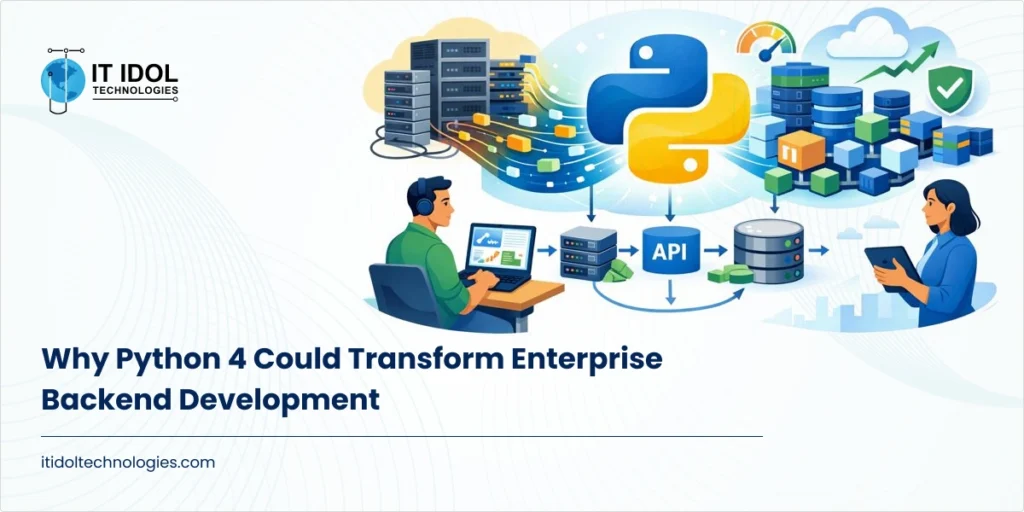
Python has long been a favorite for backend and data work, but the anticipated arrival of Python 4 promises to make it even more powerful for enterprise backend development. With potential performance gains, stronger type safety, and the massive existing ecosystem, companies could build larger, faster, and more maintainable systems using a single, flexible language. If you’re planning backend architecture or long-term projects, Python 4 may be the shift that finally pushes Python from a versatile scripting language to a core enterprise backbone.
If you’ve ever worked on a backend project, you know how critical performance, maintainability, and scalability are, especially in a business setting where slow services or messy code can translate into lost money or unhappy customers. That’s why many teams have used Python for its simplicity, readability, and vast ecosystem.
But what if the next major version of Python 4 could push things even further? What if Python could deliver enterprise-grade performance, type safety, and robustness without losing the traits that made it popular?
In this article, we explore why Python 4 could reshape enterprise backend development and what that could mean for companies, developers, and long-term software strategy.
You’ll learn: what’s potentially changing in Python 4, why those changes matter for backend use, and how businesses stand to benefit.
Why Python Already Works and What Enterprises Love
Even today, Python remains a top choice for backend, data, and cloud-native systems and for good reasons.
A huge global talent pool: In 2025, Python is used by over 8.2 million developers worldwide, even more than some older enterprise staples.
Versatile ecosystem: From web frameworks to data libraries, from automation tools to machine learning, Python’s libraries cover nearly everything enterprises might need.
Cost-effective development: Because many problems have pre-built solutions, open-source libraries and frameworks, teams can build backend services faster, cheaper, and with less risk than writing everything from scratch.
Cross-platform portability: Python runs smoothly on Windows, macOS, Linux, and even cloud environments, offering flexibility in deployment environments.
All of this explains why modern backend applications, whether cloud-native apps, APIs, SaaS platforms, or data services, often include Python as a core component.
But, as with any technology, there are trade-offs. Historically, Python’s interpreted nature sometimes made it less performant than compiled languages.
Type safety and enforcing strict contracts at scale could be weaker, which might lead to bugs or harder-to-maintain codebases, things enterprises try hard to avoid. That’s where Python 4 could change the game.
What Python 4 Could Bring to the Table
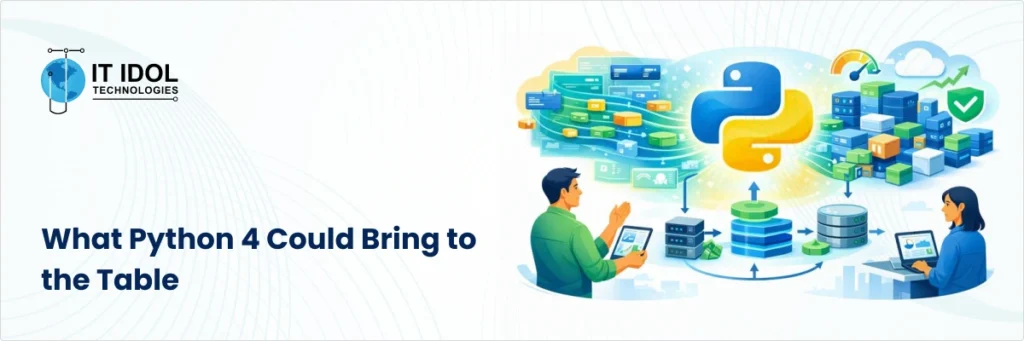
While the official release roadmap of Python 4 remains uncertain, recent proposals and community discussions point to exciting enhancements that, if realized, could make Python far more enterprise-ready. Here’s what could change.
Faster Performance (Built-in JIT)
One of the biggest promises of Python 4 is a built-in Just-In-Time (JIT) compiler for the core interpreter. This means Python code could run significantly faster, narrowing the gap between Python and traditionally faster languages.
For backend systems, think high-throughput APIs, data processing pipelines, or microservices handling many requests per second; that speed boost could translate into lower latency, higher concurrency, and more efficient resource usage. In other words, Python could suddenly scale more comfortably for heavy enterprise workloads.
Improved Type Safety and Reliability
Another potential strength of Python 4 is enhanced type hinting and stricter type validation. For large codebases, especially those maintained by big teams or built over long timelines, type safety helps catch bugs early and prevents unexpected behaviour at runtime.
That means fewer surprises in production, better maintainability, and more confidence when multiple developers contribute to the same project. For enterprises managing large backend systems, this clarity and reliability are a major win.
Cleaner, More Maintainable Codebases, Fast Prototyping to Production
Thanks to Python’s innate readability and the existing ecosystem, teams already build and iterate quickly. Python 4 can amplify this strength. Faster runtime + better type safety = you can prototype rapidly, then confidently scale up without rewriting from scratch.
Because Python’s ecosystem frameworks, libraries, and cloud SDKs are already mature and diverse, organizations can continue using familiar tools while benefiting from underlying runtime and language improvements. This reduces friction between experimentation and production deployment.
If you’re thinking about backend architecture or long-term development strategy for your business, now is a good time to evaluate where Python (or Python 4) fits and whether moving parts of your backend to Python makes sense.
Potential Challenges: What to Watch Out For?
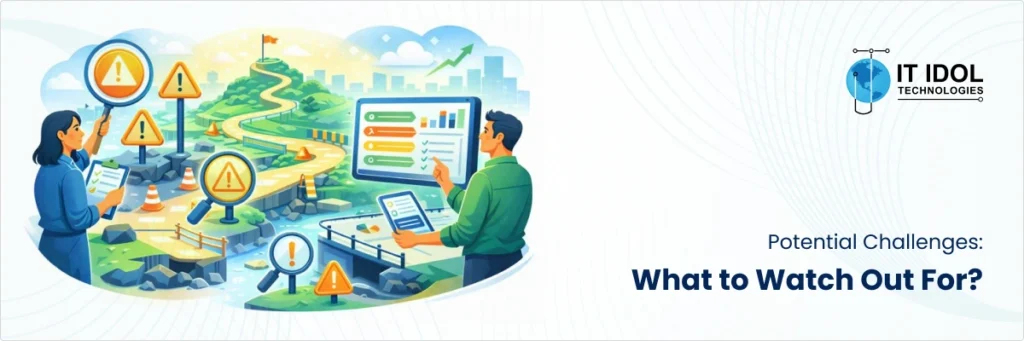
Of course, nothing is perfect. Even with Python 4’s possible improvements, there are things to consider before betting entire backend architecture on it.
Migration & Compatibility Risks
Historically, major version jumps, especially big ones, have caused compatibility headaches. Some community voices believe that a full-blown Python 4 may be delayed, or avoided altogether, because the transition from earlier versions (like 2 to 3) was painful for many.
This means enterprise teams considering Python 4 need to plan cautiously: ensure dependencies, libraries, and frameworks support the new version before committing.
Dependency Ecosystem Maintenance
While Python boasts a vast ecosystem (the package repository alone hosts hundreds of thousands of packages), not all will be actively maintained. As ecosystems evolve, keeping dependencies secure and updated remains a challenge regardless of Python version.
Teams will need good dependency management, regular audits, and maybe even a deprecation policy to ensure longevity.
Not a Silver Bullet: Architecture Still Matters
Even with speed and type safety, architecture (design, data modeling, infrastructure) remains critical. Python, whether version 3 or 4, won’t automatically solve poor architecture decisions. It’s a powerful tool, but still a tool.
What This Means for Enterprises Now
If you’re building or planning a backend microservices, API-based platforms, cloud services, data pipelines, or SaaS products, Python 4 brings a vision worth considering:
You can prototype quickly, then scale reliably without switching languages mid-project.
You can tap into the existing global talent pool (Python developers are abundant) for hiring or outsourcing, saving recruitment time and costs.
For teams blending backend, data pipelines, automation, and cloud, Python could become a “single language” backbone across domains.
With improved performance and type safety, Python lowers the risk threshold for enterprises, making Python more acceptable not just for small apps or scripts, but for mission-critical systems.
In short: Python 4 might let enterprises build fast, maintainable, and scalable backend systems, keeping complexity low while leveraging a familiar ecosystem.
Conclusion
The potential arrival of Python 4 could be a turning point for enterprise backend development. By combining speed, type safety, and maintainability while leveraging Python’s mature ecosystem, organizations may finally get a language that’s flexible and powerful enough for high-stakes backend systems.
For businesses, this means lower overhead, easier hiring, faster iterations, and more robust backend architecture. For developers, it means fewer compromises between readability, speed, and reliability.
In a world where backend systems power everything from SaaS platforms to data-driven apps, Python 4 offers a vision where one language can do it all simply, cleanly, and efficiently.
Need help evaluating whether Python (or Python 4) is the right fit for your backend project? Reach out and let’s talk.
FAQ’s
1. Is Python 4 already released?
No, as of now, Python 4 is not officially released. What we discuss here is potential and based on proposals and community ideas.
2. Will existing Python code work with Python 4?
It depends. Like any major version leap, there could be compatibility changes. Enterprises should test dependencies, frameworks, and libraries before migrating.
3. Why is a built-in JIT compiler important?
A JIT compiler can make Python code execute much faster, improving performance for backend services handling lots of requests or heavy data processing.
It helps with faster performance and better type safety, making scalability easier. But architecture still matters. Poor design will hurt regardless of language updates.
5. Is the Python ecosystem mature enough for enterprise use?
Yes. Python’s ecosystem already includes thousands of stable libraries, frameworks, and cloud tools, making it a strong candidate for enterprise work.
6.Will it be easy to hire Python developers if we move to Python 4?
Likely yes. Given Python’s popularity and large global talent pool, teams should have access to many developers trained on Python.
7. Could there be risks in adopting Python 4 early?
Yes. Early adoption could mean dealing with bugs, immature libraries, or compatibility issues. Enterprises should weigh benefits vs risks.
8.What kinds of projects benefit most from Python 4?
Backend APIs, SaaS platforms, data pipelines, cloud-native services, automation scripts, and any system needing rapid iteration, maintainability, and scalability.
9. Does Python 4 remove the need for compiled languages like Java or Go?
Not necessarily. For extremely low-latency systems, systems programming, or where type-strict enforcement is critical, compiled languages may still be preferable.
10. When should my company consider migrating to Python 4?
Once Python 4 is officially released and stable, with major dependencies and frameworks updated for compatibility, and after you’ve validated it in a testing or staging environment.
Parth Inamdar is a Content Writer at IT IDOL Technologies, specializing in AI, ML, data engineering, and digital product development. With 5+ years in tech content, he turns complex systems into clear, actionable insights. At IT IDOL, he also contributes to content strategy—aligning narratives with business goals and emerging trends. Off the clock, he enjoys exploring prompt engineering and systems design.