Incremental improvements build scalable, resilient, and profitable operations.
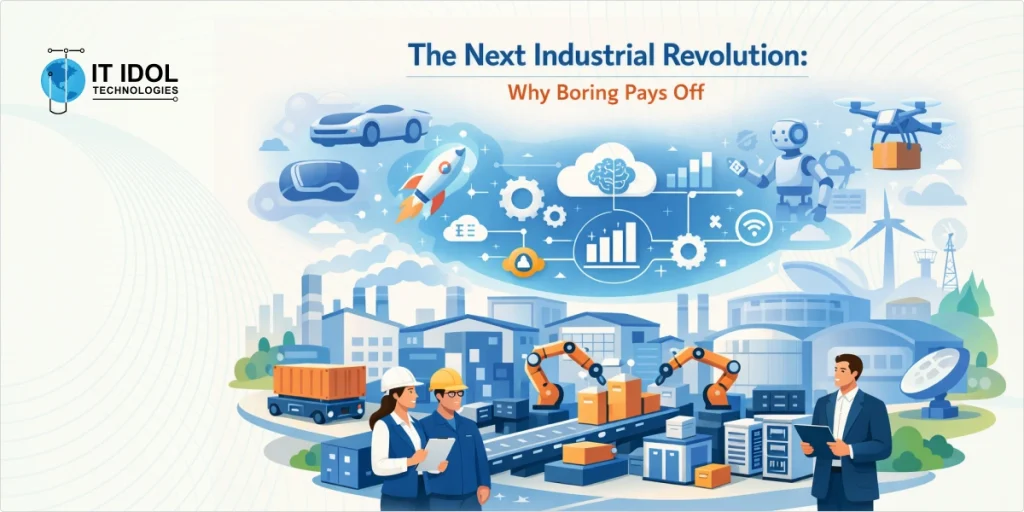
When most people imagine the next industrial revolution, they picture flashy robots, autonomous vehicles, and breakthrough AI technologies that make headlines and spark excitement. The reality, however, will feel far less glamorous.
The real transformation will be incremental, focused on efficiency, reliability, and subtle optimization across industries. It will not command viral attention, but it will quietly reshape operations, supply chains, and business outcomes at scale.
For business and IT leaders, this “boring” revolution matters precisely because it avoids the pitfalls of hype-driven adoption. Leaders who chase only visible innovations often overlook the quieter changes that cumulatively drive cost reduction, risk mitigation, and productivity gains.
Unlike headline-grabbing technologies, the next industrial revolution emphasizes systems thinking, interoperability, and data-driven decision-making elements that pay off steadily rather than spectacularly.
Understanding this shift allows enterprises to position themselves strategically. By investing in foundational improvements, digital workflows, predictive maintenance, process automation, and interoperable platforms, organizations can capture measurable business value without the volatility associated with overhyped technology experiments. The dividends are tangible: lower costs, faster operations, and a scalable framework for future innovation.
What the Topic Really Means
The next industrial revolution is not defined by single breakthrough technologies but by their integration into everyday operations. It is the maturation of digital, automation, and data capabilities into a cohesive system that steadily enhances performance. Think of it as the difference between early internet experiments and the reliable web-based infrastructure that now powers global commerce.
At its core, this revolution is about applying technology to stabilize and optimize industrial processes rather than creating dramatic, standalone spectacles.
For example, sensors on factory equipment, advanced analytics, and predictive algorithms may not attract headlines individually, but together they reduce downtime, improve quality, and extend equipment life.
Similarly, software that enables supply chain visibility or energy optimization may seem mundane, yet it directly drives efficiency and resilience.
Reframing the discussion, the revolution is less about “new” technology and more about leveraging existing tools in intelligent, integrated ways. It is about connecting data flows, automating repetitive tasks, and enabling decision-making at scale. Leaders need to understand that the payoff comes from cumulative improvements, not isolated innovations.
The implications extend beyond operations. Strategic planning, resource allocation, and organizational design all shift toward data-informed, continuous improvement mindsets. IT and business leaders must focus on interoperability, process standardization, and change management foundational work that is methodical and often invisible but essential for scaling impact.
Ultimately, the next industrial revolution rewards consistency, foresight, and disciplined execution. The “boring” elements workflow integration, predictive maintenance, and automated monitoring are precisely the levers that generate sustainable returns over time.
Recognizing and embracing this perspective allows organizations to invest wisely and build a foundation for more visible innovations in the future.
Where It Delivers Real Value
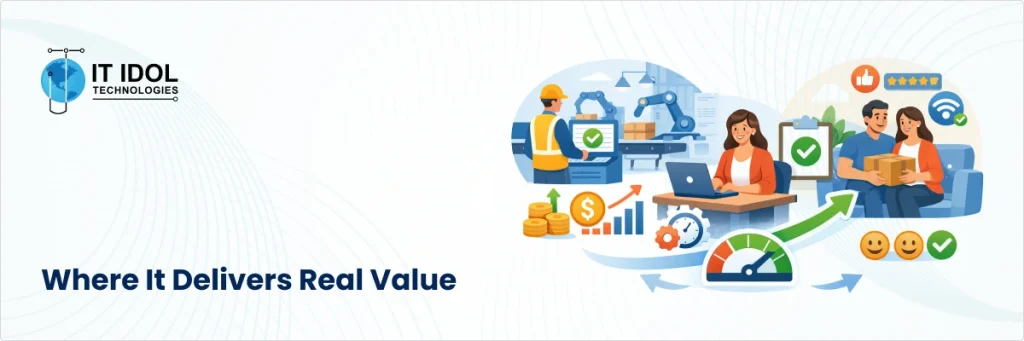
The real value of this incremental revolution shows up in practical, measurable ways across industries.
1. Predictive Maintenance in Manufacturing
Factories can deploy sensors and AI analytics to anticipate equipment failures. Downtime decreases, repair costs drop, and production schedules become more predictable. Leaders gain confidence in operational continuity and capital allocation decisions.
2. Supply Chain Visibility and Optimization
End-to-end tracking, real-time analytics, and automated alerts reduce delays, lower inventory costs, and mitigate disruptions. Executives can plan more proactively rather than reactively.
3. Energy and Resource Efficiency
Smart monitoring of energy, water, or material consumption improves sustainability metrics and lowers operational costs. These “invisible” optimizations support regulatory compliance and long-term profitability.
4. Process Automation and Workflow Standardization
Automation of routine tasks in logistics, finance, or HR frees teams for higher-value work while reducing errors. This streamlines decision-making and enhances cross-functional collaboration.
Across these scenarios, the common thread is a consistent impact. There is rarely a single dramatic event, but the cumulative benefits are substantial. Organizations that embrace these foundational improvements position themselves to scale operations, reduce risk, and respond to market changes faster than competitors chasing only headline technologies.
Business Impact and Strategic Implications
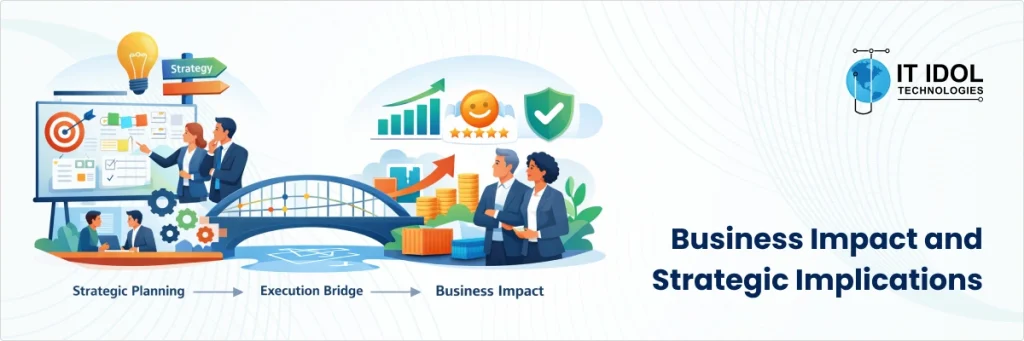
The next industrial revolution drives value along four strategic dimensions: efficiency, risk, growth, and scalability.
Efficiency
Incremental automation and integrated data systems reduce manual work, optimize resource allocation, and improve throughput. Leaders can reallocate human capital toward strategic initiatives rather than repetitive tasks.
Risk Management
Predictive analytics and system monitoring detect anomalies before they escalate. Organizations gain resilience against operational disruptions, supply chain volatility, and equipment failures, reducing financial and reputational exposure.
Growth Enablement
Foundational improvements free resources for experimentation and innovation. A factory with predictable output and streamlined processes can scale production, enter new markets, or introduce new products with lower incremental risk.
Scalability
Standardized workflows, integrated platforms, and automated decision frameworks enable consistent replication across units, geographies, and business lines. Enterprises can grow without proportionally increasing operational complexity.
Strategically, the revolution encourages a shift in leadership thinking. Success depends less on chasing novelty and more on disciplined execution, system interoperability, and continuous improvement. Investments in the “boring” aspects of technology, data hygiene, workflow standardization, and monitoring infrastructure accumulate advantages over time, creating a compounding effect on profitability and operational resilience.
In essence, the next industrial revolution rewards patience, strategic alignment, and rigorous application of technology to everyday operations. Leaders who understand this can orchestrate incremental change that compounds into substantial business impact.
Key Challenges or Trade-offs
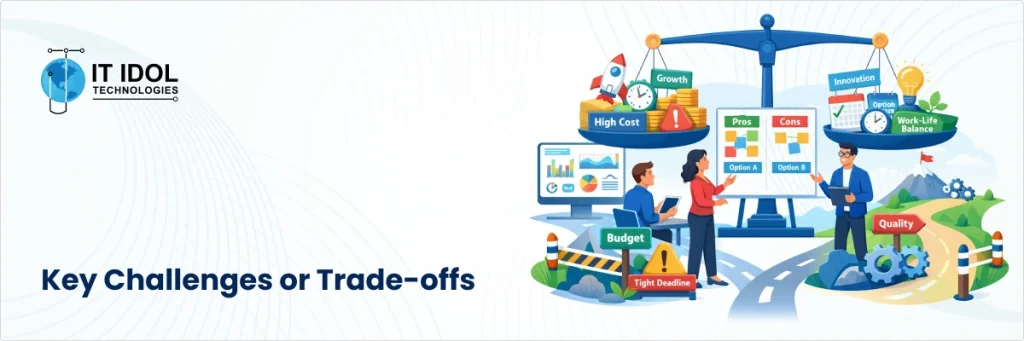
While the benefits are clear, there are trade-offs to consider.
Perceived Lack of Excitement
Because the changes are incremental, stakeholders may underestimate their value. Leaders must communicate measurable outcomes to maintain support.
Upfront Investment and Change Management
Implementing sensors, analytics, and automation requires capital and disciplined adoption processes. Poor change management can slow progress or reduce ROI.
Integration Complexity
Connecting legacy systems, disparate data sources, and multiple platforms can be technically challenging. Teams must prioritize interoperability and long-term maintainability.
Skill Requirements
Success demands staff capable of managing and interpreting integrated systems. Upskilling and cross-functional collaboration are essential.
These challenges are not insurmountable. They are decision points that leaders can navigate strategically to ensure steady, measurable returns from foundational improvements rather than chasing volatile, headline-grabbing technology.
Closing Insight
The next industrial revolution may feel mundane compared to AI-powered robots or self-driving vehicles, but its impact will be profound. The “boring” investments, predictive maintenance, supply chain visibility, energy optimization, and workflow standardization deliver cumulative benefits that dramatically improve efficiency, reduce risk, and support scalable growth.
Organizations that embrace these incremental improvements gain a competitive edge not through spectacle, but through operational discipline and foresight. The payoff is predictable, measurable, and compounding. Leadership shifts from reactive problem-solving to proactive, data-driven decision-making, enabling enterprises to scale confidently while maintaining resilience.
The revolution also redefines innovation. It is no longer about chasing novelty; it is about creating systems that reliably enhance performance and unlock new opportunities. By focusing on foundational capabilities, businesses position themselves to capture the benefits of future breakthroughs without disruption.
Ultimately, success will come to leaders who recognize that boring does not mean insignificant. Steady, methodical improvement forms the backbone of long-term competitive advantage. Enterprises that prioritize integration, continuous optimization, and system reliability will emerge as the winners of this industrial transformation, reaping substantial returns quietly yet decisively.
FAQ’s
1. Why will the next industrial revolution feel boring?
It focuses on incremental process optimization, integration, and efficiency rather than flashy technology breakthroughs.
2. What drives its impact?
Consistent improvements in workflow, predictive analytics, and system integration deliver cumulative operational benefits.
3. Which industries benefit most?
Manufacturing, logistics, energy, and large-scale operations with complex processes see the most measurable gains.
4. Are there risks?
Challenges include integration complexity, change management, and stakeholder perception of low excitement.
5. Does it require new technology?
Mostly, it leverages existing tools applied intelligently across systems rather than entirely new innovations.
6. How does it affect growth?
Efficient, reliable operations free resources for expansion, experimentation, and market responsiveness.
7. Is it scalable?
Yes, standardization and integrated systems enable enterprise-wide replication without proportional complexity.
8. What is the role of leadership?
Leaders must prioritize disciplined execution, interoperability, and communication of measurable outcomes.
9. Does it replace innovation?
No, it creates a foundation that makes future innovation safer and more impactful.
10. What is the ultimate takeaway?
Steady, incremental improvements are strategic levers that quietly generate substantial long-term business value.
Parth Inamdar is a Content Writer at IT IDOL Technologies, specializing in AI, ML, data engineering, and digital product development. With 5+ years in tech content, he turns complex systems into clear, actionable insights. At IT IDOL, he also contributes to content strategy—aligning narratives with business goals and emerging trends. Off the clock, he enjoys exploring prompt engineering and systems design.