In today’s digital-first economy, enterprises increasingly seek seamless, scalable, and highly customizable platforms to deliver efficient customer experiences. The travel and hospitality sector, in particular, presents unique operational and technical challenges. Large organizations frequently require systems capable of supporting multiple clients while maintaining client-specific customization. One example of such an initiative involves the development of a multi-tenant hotel booking platform designed to support enterprise-scale travel management needs. This case study highlights the complexity of building enterprise-grade booking platforms and demonstrates how technology partners can enable scalable, flexible, and reliable digital solutions.
Understanding Multi-Tenant Hotel Booking Platforms
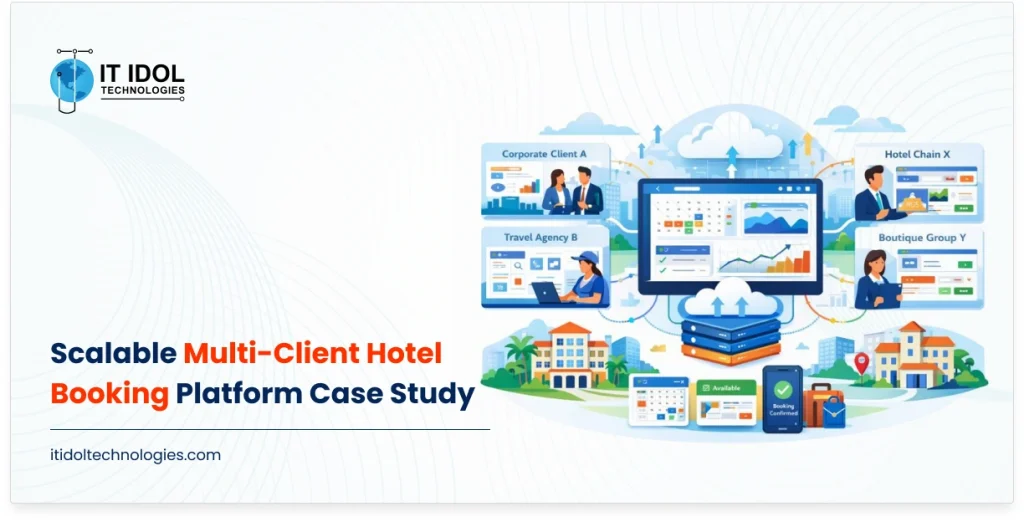
A multi-tenant hotel booking platform is a unified system designed to support multiple enterprise clients within a shared infrastructure while allowing each client to maintain distinct branding, workflows, and operational rules. Unlike traditional single-client applications, multi-tenant systems must balance standardization with configurability. In practical terms, the platform maintains a centralized booking engine responsible for search, selection, payment processing, and confirmation workflows. Simultaneously, it allows individual clients to implement customized user interfaces, pricing logic, loyalty frameworks, and specialized booking features such as corporate reservation modes or streamlined checkout experiences. Balancing consistency with customization introduces both technical and operational complexity. Without careful architectural design, such platforms may encounter performance limitations, fragmented user experiences, or maintenance challenges across multiple client deployments.
The Business Need: Enterprise Travel Platform Requirements
A global enterprise organization sought to implement a sophisticated hotel booking experience tailored to internal users and corporate travel partners. The organization required a platform capable of:
Supporting hotel search and booking across multiple geographic regions
Managing complex pricing models, tax rules, and discount structures
Integrating organization-specific loyalty and reward programs
Delivering a branded user experience aligned with corporate identity standards
To address these requirements, the enterprise partnered with IT IDOL Technologies to design and implement a solution capable of balancing scalability, configurability, and operational reliability.
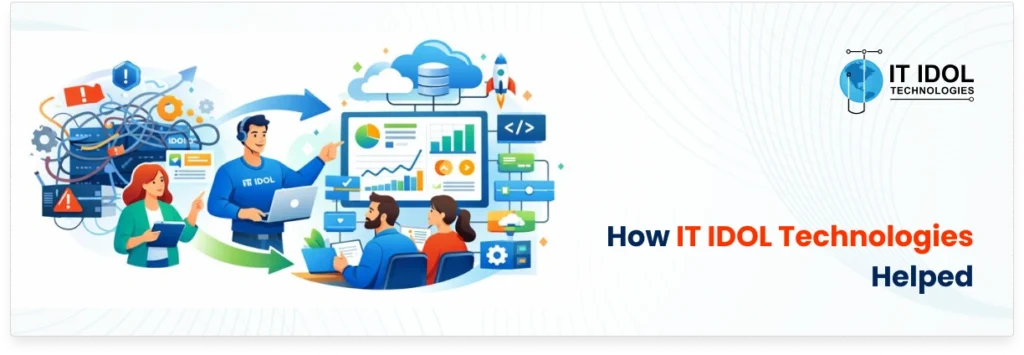
How IT IDOL Technologies Delivered the Solution
1. Multi-Tenant Architecture Development
At the foundation of the platform was a scalable multi-tenant architecture. IT IDOL Technologies engineered a shared booking engine designed to support multiple enterprise clients while enabling dynamic user interface rendering. This architecture ensured that core booking functions, including search, selection, payment processing, and confirmation workflows, remained standardized and optimized. At the same time, individual clients could deploy customized interfaces without duplicating backend infrastructure or business logic. This approach enabled the enterprise to deliver a fully branded experience while benefiting from a centralized, efficient backend system.
2. Client-Specific Customizations
Customization was a critical requirement for the platform’s success. IT IDOL Technologies implemented configurable modules that allowed the enterprise to maintain unique user experiences without affecting system stability.
Key customization areas included:
User Interface Customization: Client-specific themes, layouts, and interface components were developed to align with corporate branding standards. Landing pages, booking workflows, and reservation widgets were fully tailored.
Business Rule Configuration: The system supported variable booking rules, discount policies, and tax configurations. Loyalty points, reward programs, and promotional engines were seamlessly integrated into booking workflows.
Feature Variability: Optional capabilities such as express checkout, corporate booking workflows, and premium support options were implemented using configuration-driven feature toggles, allowing rapid adjustments without redevelopment.
These capabilities enabled the enterprise to deliver personalized user experiences while maintaining centralized system governance.
3. End-to-End Booking Flow Development
The platform’s booking lifecycle was designed to ensure seamless and reliable user interactions. Development efforts focused on:
Optimizing search functionality to provide accurate and rapid results across multiple geographies
Integrating third-party APIs to deliver real-time availability, pricing updates, and reservation confirmations.
Implementing secure and adaptable payment processing workflows compatible with preferred payment providers
This enabled enterprise users to access a streamlined booking experience comparable to leading commercial travel platforms.
4. Performance Optimization
Enterprise-scale systems require consistent performance under high concurrency levels. IT IDOL Technologies prioritized performance optimization through:
Enhancing reusable components to support high transaction volumes
Reducing redundant data requests and improving application architecture efficiency
Conducting rigorous quality assurance processes to ensure deployment stability.
The resulting platform successfully supported large volumes of concurrent users while maintaining responsiveness during peak booking periods.
5. Cross-Functional Collaboration
Developing a complex enterprise booking system required close coordination between technical teams, product stakeholders, and design groups. IT IDOL Technologies collaborated with business teams to gather requirements, translate them into technical frameworks, and ensure the timely delivery of platform enhancements.
Continuous stakeholder engagement ensured that platform capabilities aligned with evolving enterprise travel policies and operational priorities.
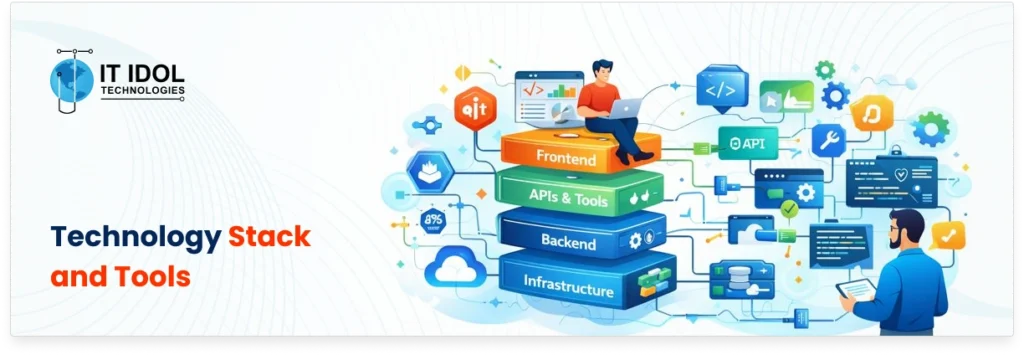
Technology Stack and Tools
The platform leveraged modern technologies to deliver reliability and scalability:
Frontend: Angular enabled the development of responsive and dynamically configurable user interfaces.
Backend:.NET provided a scalable, high-performance framework supporting booking engine operations.
Containerization and DevOps: Docker, Kubernetes, and GitHub Actions supported automated deployment, version management, and continuous integration pipelines.
Event Sourcing: EventStore facilitated transaction tracking, workflow orchestration, and reliable state management.
This technology stack allowed the platform to remain flexible while supporting ongoing feature expansion and user growth.
Benefits Realized by the Enterprise Organization
Implementation of the multi-tenant booking platform delivered several measurable advantages:
1. Scalability: The platform supported high volumes of concurrent bookings without performance degradation.
2. Customization: Client-specific branding, interface configurations, and business rule flexibility enabled tailored user experiences.
3. Operational Efficiency: A centralized backend architecture reduced system maintenance complexity and operational overhead.
4. Improved User Experience: Seamless booking workflows, integrated loyalty features, and configurable enhancements improved user engagement and satisfaction.
5. Future Readiness: The modular design enabled rapid feature integration, third-party connectivity expansion, and simplified onboarding of additional enterprise clients.
Key Lessons from the Implementation
The development of this enterprise travel platform highlights several important insights:
Architectural Planning Is Critical: Multi-tenant design must balance scalability with configurability.
Configuration-Driven Flexibility Is Essential: Business rules, interface elements, and features should be adjustable without requiring code changes.
Performance Optimization Must Be Proactive: High-traffic systems demand efficient component design and API management.
Cross-Functional Collaboration Drives Success: Continuous communication ensures alignment between technical capabilities and business goals.
Modern infrastructure enhances agility: Containerization, event sourcing, and automated DevOps pipelines improve platform reliability and scalability.
Conclusion
Developing a multi-client hotel booking platform for enterprise travel management is a technically demanding initiative requiring architectural precision, strategic planning, and cross-team collaboration. Through collaboration with IT IDOL Technologies, the enterprise organization successfully implemented a scalable, configurable, and high-performance booking solution aligned with its operational requirements. This implementation demonstrates the effectiveness of multi-tenant architecture in delivering standardized workflows alongside client-specific customization. It also reinforces the importance of performance engineering, integration strategies, and modern DevOps practices in building enterprise-grade digital platforms. For organizations seeking to deliver specialized services across diverse user groups, this case study provides a practical blueprint for successfully implementing scalable and adaptable multi-client systems.
The case study explores the design and implementation of a multi-client hotel booking platform capable of managing high transaction volumes, multiple tenants, and complex integrations while maintaining performance reliability.
Multi-client, or multi-tenant, architecture allows multiple business units or clients to operate within a shared system while maintaining secure data isolation and independent configurations.
Booking systems often experience unpredictable demand spikes, seasonal fluctuations, and real-time availability updates. Scalability ensures stable performance during peak usage.
The platform utilizes distributed architecture, load balancing, and optimized data processing strategies to sustain high performance during peak booking periods.
The platform integrates with hotel inventory providers, payment processors, travel management systems, and internal enterprise tools through standardized APIs.
The solution improved booking reliability, streamlined onboarding of new business clients, reduced operational overhead, and supported long-term platform scalability.
Enterprise architects, technology leaders, product managers, and decision-makers developing travel, marketplace, or multi-client platforms can benefit from these insights.
The architectural principles demonstrated multi-tenancy, scalability, resilience, and secure integration apply broadly to enterprise systems serving multiple clients simultaneously.
Deval Rathod
Founder & CEO
|
Deval Rathod is the Founder and CEO of IT IDOL Technologies, a custom software development company. With over a decade of experience in software engineering, solution architecture, and technology leadership, she has worked across custom software development, enterprise applications, AI & ML, and digital transformation. Her expertise includes guiding technology teams, designing scalable software solutions, and helping businesses evaluate and implement emerging technologies. She contributes insights on software engineering, artificial intelligence, enterprise technology, and digital transformation.