In today’s fast-paced business world, companies often invest in hardware: devices, equipment, tools, even locked cases or containers that hold sensitive assets. But hardware alone isn’t enough. Without real-time tracking, companies face major risks:
Asset loss from theft or misplacement: When devices aren’t tracked live, it’s nearly impossible to know if they’re lost, stolen, or simply forgotten somewhere.
Operational blind spots: You don’t know where your devices are, whether they’re idle or in use, which means inefficiency, under-utilisation, and poor resource planning.
Lack of accountability and security: You can’t enforce zones, detect unauthorized use, or react fast when something goes wrong.
Poor data for business decisions: Without logs of usage, trips, battery status, etc., you can’t analyze performance, generate reports, or forecast maintenance/replacement cycles properly.
Studies show that without automated tracking, businesses can lose 5–10% of their assets annually to misplacement or theft.
Manual asset tracking is also significantly less effective: organisations that shift to automated tracking typically cut asset losses by 45-60% and improve asset utilization by 25-35%.
If you rely only on physical locks, even patented locking cases, you still lack the data, mobility, and oversight to guarantee security or efficiency. That’s why many businesses end up struggling with poor visibility, frequent losses, and inefficiencies.
The Solution: Integrated Real-Time Tracking Platform
Enter an integrated digital tracking platform, one that pairs smart devices (GPS/GSM/wifi) with a real-time web and mobile interface. With such a system, companies gain full visibility and control, with benefits such as:
Live tracking & geofencing: Know exactly where each device is, monitor trips, and get instant alerts when devices move outside defined zones.
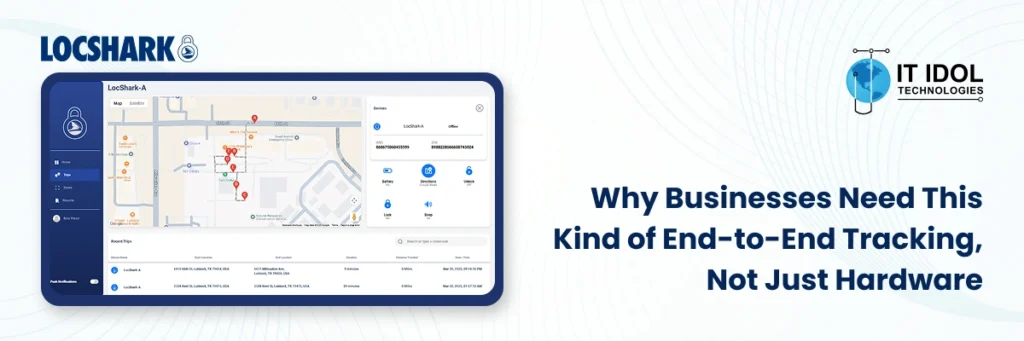
Detailed device data & reports: View device status, battery level, last known location, trip history, stop/start locations, travel distance & duration, all in one dashboard. This enables better asset management and audit-ready data.
Automated alerts & security measures: Notifications for unauthorized movement, low battery, or suspicious activity; ability to lock/unlock devices, trigger alerts (like “beep”), and control access remotely.
Optimized asset utilisation & reduced loss: Better allocation and tracking mean fewer duplicate purchases, less idle hardware, and the prevention of theft, often resulting in significant cost savings.
Improved operational efficiency and accountability: With accurate logs and usage data, management can track usage patterns, enforce compliance, and make data-driven decisions across device fleets.
Across industries from logistics and construction to device leasing and security, such a platform shifts tracking from reactive (dealing with losses later) to proactive (preventing losses, misuse, and inefficiency upfront).
How We Helped Build That Solution: The Case of LocShark
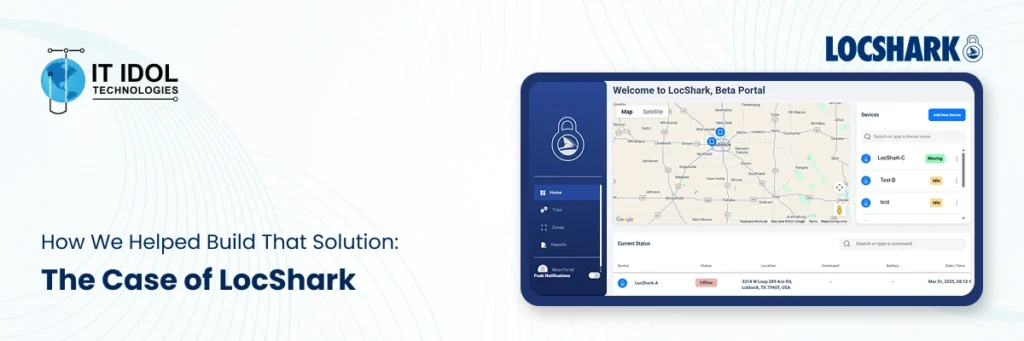
When the team behind LocShark, a Texas-based firm that manufactures security tracking cases, brought their vision to life, they knew locking hardware alone wouldn’t be enough. They needed a robust backend and an intuitive frontend to match. That’s where IT IDOL Technologies stepped in.
Their Needs
Live device tracking: show device location on the home screen, plus trips on a map in real-time.
Zone-based geofencing: allows users to define “safe zones” and get notified if a device moves out.
Full device metadata everywhere: name, battery status, last known location, and time.
Trip history & reporting: start/stop locations, distance, duration, date/time.
Device control: lock/unlock, sound alerts (“beep”), direction tracking.
Administrative dashboard: user and subscription management, ability to add/remove devices.
What We Built
A comprehensive web platform: backend powered by Node.js + Express.js, frontend built with React.js + React framework, offering seamless real-time interactivity.
Integration with mapping services (Google Maps API) to render device locations and trips on a map in real-time.
Features such as geofences, zone-based alerts, device management, battery/status notification, history & reports, all wrapped in a clean UI accessible via web (and optionally mobile).
Admin module for user/subscription management, device onboarding, and data filtering/reporting.
Exportable reports (PDF/CSV), trip & zone logs, and filtering/sorting for usability and audit readiness.
The result: LocShark now offers customers not just a “secure case,” but a full-fledged tracking solution giving businesses visibility, control, and actionable data on their assets.
Why Businesses Need This Kind of End-to-End Tracking, Not Just Hardware
Hardware isn’t enough: Even the most secure physical lock cannot tell you where the device is, whether it’s being moved, or if it’s dead. The real value comes from data, alerts, and visibility.
Real-time tracking deters theft and misuse: When assets are live-tracked and geofenced, unauthorized use becomes difficult, and alerts mean you can act before it’s too late. This drastically reduces loss.
Better utilization & fewer redundant purchases: With usage logs and status data, companies can analyze actual usage, avoiding unnecessary asset purchases or multiple devices lying idle.
Compliance, audits, and reporting become simpler: Detailed logs, exportable reports, and dashboards enable audit readiness and transparency, especially for regulated industries.
Scalability and control as business grows: As the number of devices grows, manual tracking becomes unmanageable. A platform scales whether you have 10 devices or 10,000.
For example, asset-tracking systems have been shown to improve utilization by up to 35% while cutting losses by nearly half.
Closing Thoughts
In a world where businesses increasingly rely on hardware devices, containers, and tools, locking them physically is no longer enough. What matters is knowing where they are, when they move, and how they’re used.
The combination of smart hardware + real-time tracking + intuitive interface exemplified by the LocShark / IT IDOL Technologies collaboration turns physical security into actionable asset intelligence.
For any business managing multiple devices or equipment, if you still rely only on locks or spreadsheets, it’s time to upgrade to a tracking platform. It’s not just about preventing losses. It’s about gaining control, insights, and efficiency.
TL;DR
Businesses that rely on hardware and field devices often struggle with visibility, security, and real-time monitoring. Locks alone aren’t enough; companies need a digital tracking layer that shows live location, trip history, zone alerts, battery status, and device activity.
The LocShark case shows how this shift works in practice. Their patented security cases became far more powerful once supported by a full tracking platform built with React, Node.js, Express.js, and Google Maps API.
With help from IT IDOL Technologies, they moved from a hardware-only model to a complete end-to-end tracking ecosystem that gives users clarity, control, and actionable insights across all devices.
Hardware can secure a device physically, but it cannot show live location, unauthorized movement, or usage patterns. A digital platform adds visibility, alerts, and insights enabling companies to prevent loss and improve efficiency.
Real-time location and zone-based alerts help businesses detect movement instantly, track trips, and maintain accountability. It reduces theft, misuse, and operational blind spots.
It centralizes device data location, battery level, usage history, trips, and zones into a single dashboard. This reduces manual tracking, improves decision-making, and cuts time spent locating or verifying devices.
Most platforms use a combination of React (frontend UI), Node.js + Express.js (backend APIs), GPS/GSM/WiFi hardware modules, and mapping tools such as the Google Maps API for real-time visualization.
Yes. Users can add, edit, and remove devices, track each one individually, view detailed activity logs, and generate reports all from a unified interface.
Platforms support zone alerts, battery-level notifications, unauthorized movement detection, trip activity updates, lock/unlock commands, and beep alerts for locating devices.
Trip logs show start/stop points, distance traveled, duration, and timestamps. These insights help companies analyze device usage, identify unusual routes, optimize field operations, and create audit-ready reports.
Reports provide a historical record of device activity, helping with compliance, auditing, performance analysis, and strategic planning. Export options like PDF or CSV also support documentation needs.
Cloud platforms scale easily, work across devices, and allow real-time sync. They handle large volumes of data, ensure quick updates, and support remote monitoring from anywhere.
They built the full web platform from live GPS tracking to zone management, device controls, reporting, trip logs, and admin dashboards, turning LocShark’s hardware into a complete smart-tracking solution.
Deval Rathod
Founder & CEO
|
Deval Rathod is the Founder and CEO of IT IDOL Technologies, a custom software development company. With over a decade of experience in software engineering, solution architecture, and technology leadership, she has worked across custom software development, enterprise applications, AI & ML, and digital transformation. Her expertise includes guiding technology teams, designing scalable software solutions, and helping businesses evaluate and implement emerging technologies. She contributes insights on software engineering, artificial intelligence, enterprise technology, and digital transformation.